Meta hasn’t killed interest targeting. But it has made it far less important.
If you’re still spending time layering 10–15 interests to “find the right audience,” you’re focusing on the wrong lever.
What’s Changed
Meta’s newer features like Advantage+ Audience and AI-driven targeting allow you to describe your audience at a high level.
Example:
“Men 35-44 interested in AFL”
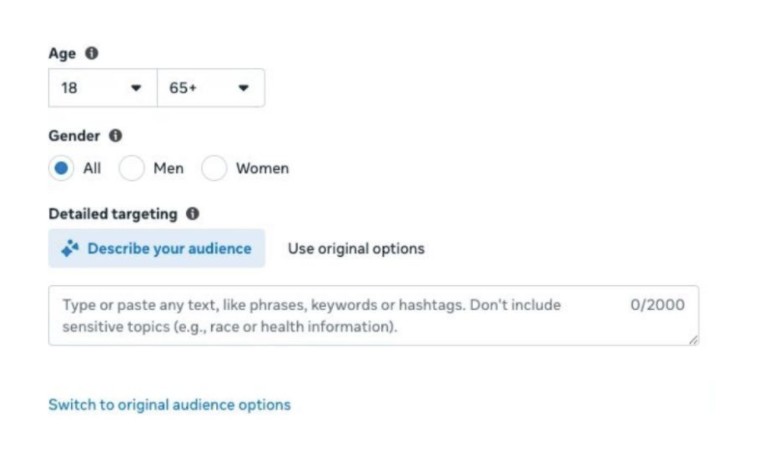
From there, Meta:
- Interprets behaviour, not just interests
- Expands beyond your inputs
- Optimises based on real conversion data
It’s no longer matching users to a list of interests.
It’s identifying people most likely to take action.
Why Interest Stacking Is Losing Relevance
Interest stacking used to be a way to control quality.
Now it often:
- Restricts reach
- Slows learning
- Limits Meta’s ability to find converters
In many cases, broader audiences outperform tightly defined ones.
Not because targeting doesn’t matter.
But because Meta is better at it than manual setup.
What’s Actually Driving Performance
Meta is now optimising using:
- Pixel and Conversion API data
- On-platform engagement (video views, clicks, saves)
- Historical conversion behaviour
- Pattern recognition across millions of users
This means performance improves when the system has:
1. Clean, reliable data
2. Enough conversion volume
3. Clear signals of what a “good customer” looks like

The Real Shift: From Targeting to Creative
Targeting is no longer your competitive edge.
Creative is.
If Meta is deciding who sees your ad, then:
- Your hook determines if they stop
- Your message determines if they care
- Your offer determines if they convert
Two advertisers can target the same broad audience.
The one with better creative wins.
What You Should Do Instead
Focus your effort where it actually drives return:
1. Simplify Targeting
- Use broad or lightly guided audiences
- Avoid over-layering interests
- Let Meta optimise
2. Strengthen Tracking
- Ensure pixel and CAPI are implemented correctly
- Track meaningful conversion events
- Prioritise data quality over quantity
3. Invest in Creative
- Test multiple hooks and angles
- Align messaging to real customer problems
- Focus on clarity, not cleverness
4. Build Conversion Volume
- Optimisation improves with data
- Low volume limits performance regardless of targeting

Bottom Line
Meta hasn’t removed targeting.
It has automated it.
That means your advantage is no longer in how you build audiences.
It’s in how well you understand your customer and translate that into creative that converts.
If your tracking is solid, Meta will find buyers.
If your creative is weak, it won’t matter who you target.