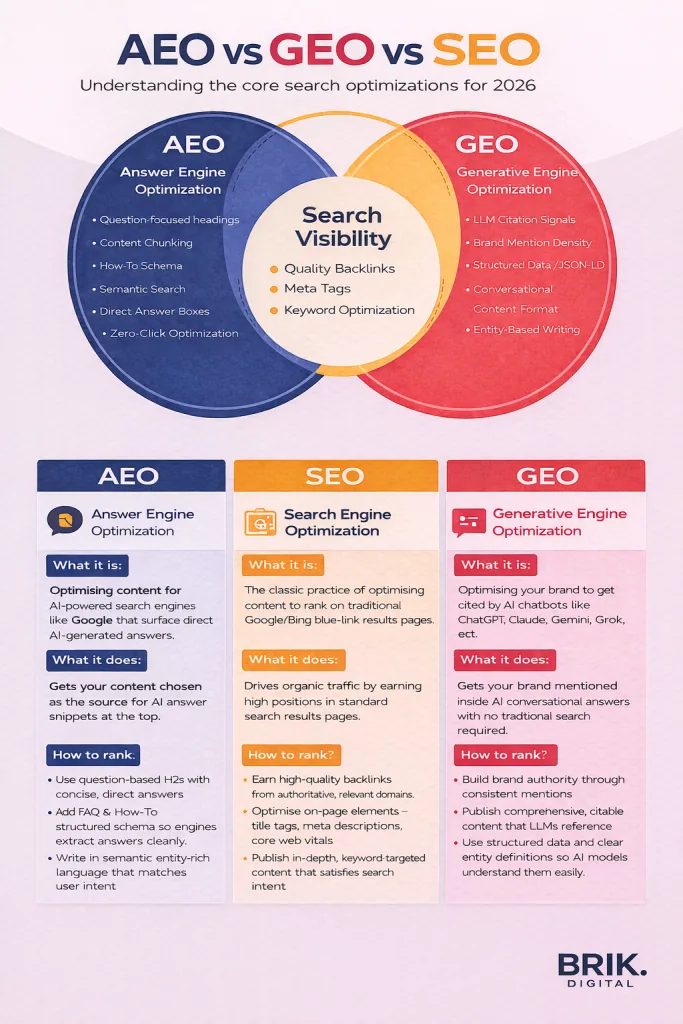
Understanding the Core Search Optimisations for 2026
Search is evolving quickly.
For the past two decades, Search Engine Optimisation (SEO) has focused on ranking in traditional search results. But today, customers increasingly receive answers directly from AI-powered systems like Google’s AI Overviews, ChatGPT, Gemini, and other generative search experiences.
This shift has introduced two new optimisation disciplines:
• AEO — Answer Engine Optimisation
• GEO — Generative Engine Optimisation
Together with traditional SEO, these three approaches define how businesses will be discovered in the modern search ecosystem.
Understanding the differences is essential for businesses that want to remain visible as search continues to evolve.
Search Engine Optimisation (SEO)
SEO is the foundation of digital discoverability.
It focuses on helping websites rank in traditional search results pages such as Google or Bing. When someone searches for a product, service, or question, SEO determines whether your website appears in the list of results.
While the landscape is changing, SEO remains the infrastructure that powers visibility across all search systems, including AI-driven search.
Quality Backlinks
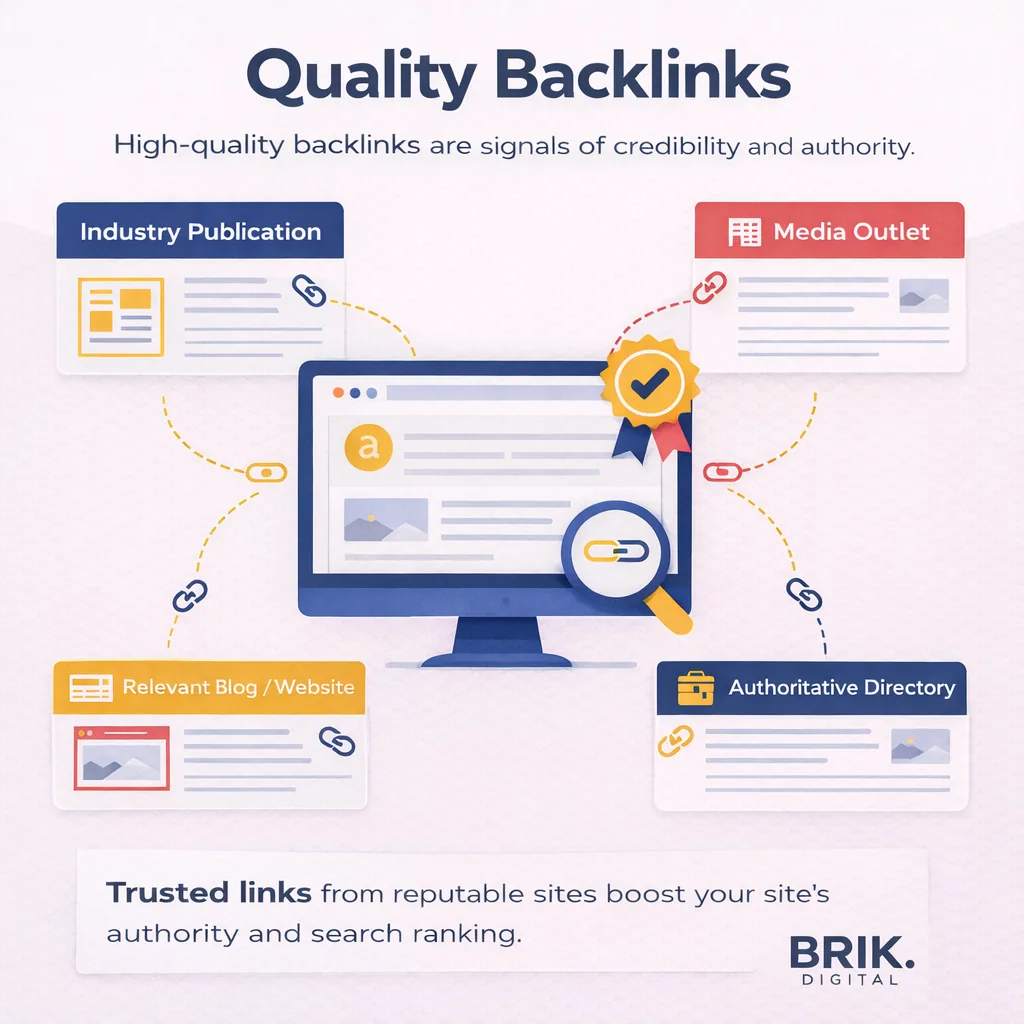
Backlinks are links from other websites pointing to your website.
Search engines treat backlinks as signals of credibility and authority. When reputable websites reference your content, search engines interpret this as a vote of confidence in the value of your information.
High-quality backlinks typically come from:
• Industry publications
• Media outlets
• Relevant blogs and websites
• Authoritative directories
The quality of the linking website matters far more than the number of links. A few trusted links can carry more influence than dozens of low-quality ones.
Strong backlink profiles help search engines determine that your site is a reliable source worth ranking.
Meta Tags
Meta tags help search engines understand what a page is about.
The most important ones include:
• Title tags — the clickable headline shown in search results
• Meta descriptions — the summary shown beneath the headline
• Header tags (H1–H3) — the structure of your content
Clear and well-written meta tags improve both:
• Search visibility
• Click-through rates
When search engines clearly understand your content, they are far more likely to rank it for relevant searches.
Keyword Optimisation
Keyword optimisation ensures your content matches the language people use when searching.
This involves identifying phrases your audience uses and integrating them naturally into:
• Page titles
• Headings
• Content
• URLs
• Internal links
However, modern keyword optimisation is no longer about repeating words. Instead, search engines analyse topics, intent, and context.
Effective SEO content answers the full question behind a search, not just the words used in the query.

Answer Engine Optimisation (AEO)
Answer Engine Optimisation focuses on helping your content become the source of direct answers presented by AI-powered search engines.
Platforms like Google increasingly surface answers directly on the results page rather than directing users to a list of websites.
This means the goal of AEO is to ensure your content becomes the answer that search engines extract and present.
Question-Focused Headings
Many searches are phrased as questions.
Examples include:
• What is Answer Engine Optimisation?
• How does SEO work?
• What is the best marketing strategy for small business?
When content includes headings that mirror these natural questions, search engines can more easily identify relevant answers.
Structuring content using question-based headings improves the chances that search engines will extract your content for featured snippets and AI answers.
Content Chunking
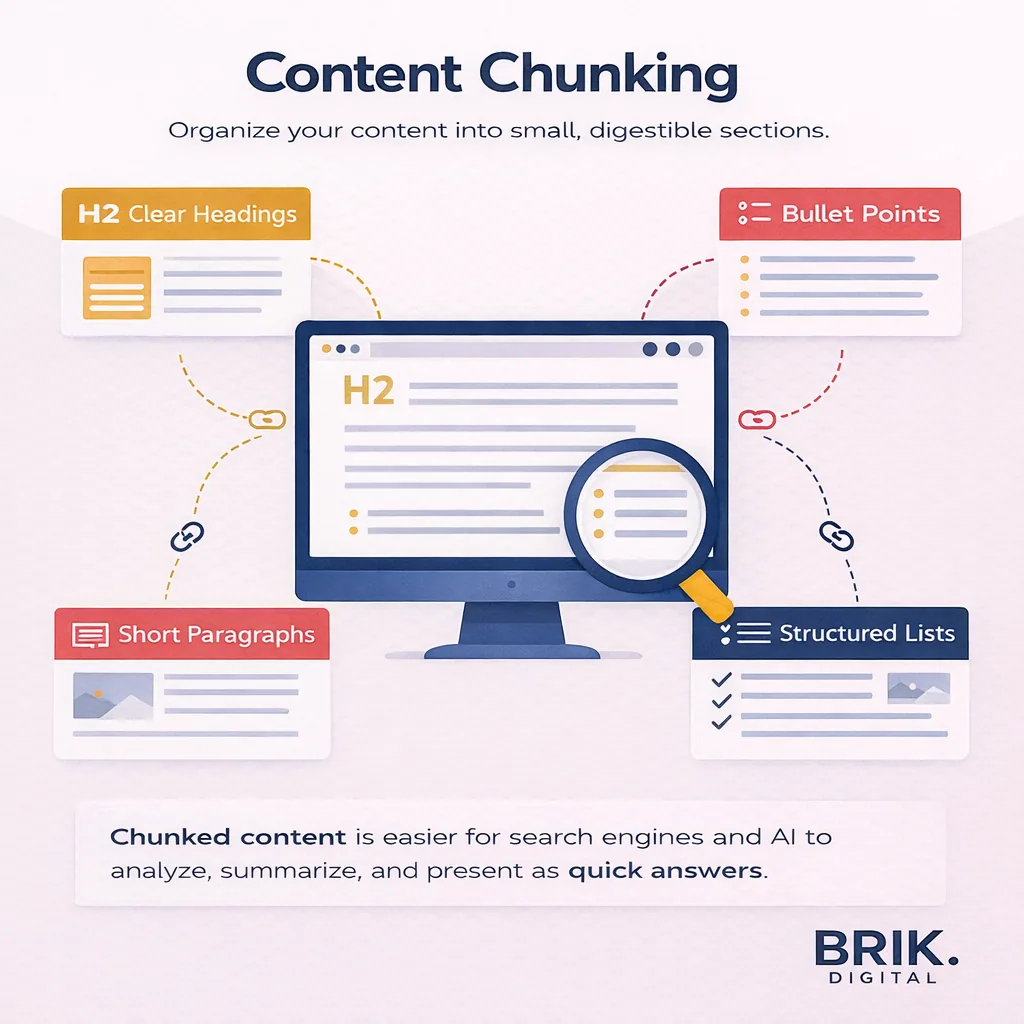
Content chunking refers to structuring information in small, digestible sections.
Instead of long blocks of text, information is broken into:
• Clear headings
• Short paragraphs
• Bullet points
• Structured lists
This structure allows AI systems to quickly identify specific answers inside a page.
Well-structured content is far easier for search engines to analyse, summarise, and present in AI-generated responses.
How-To Schema
Schema markup is structured code added to a webpage that helps search engines understand the content more precisely.
How-To schema is particularly valuable because it clearly identifies instructional content.
For example, a page explaining how to perform a task can include structured steps that search engines recognise as a process.
When implemented correctly, this schema helps search engines display:
• Step-by-step instructions
• Rich search results
• Featured snippets
It also increases the likelihood that AI systems will select your page as the source of procedural answers.
Semantic Search
Modern search engines focus on meaning rather than exact keywords.
Semantic search analyses:
• The intent behind a query
• The relationships between concepts
• The broader topic being discussed
For example, if someone searches for “improve website traffic”, search engines understand related concepts such as:
• SEO strategy
• content marketing
• conversion optimisation
Content written with semantic depth helps search engines recognise that your page fully addresses the topic, improving visibility across a wider range of related queries.
Direct Answer Boxes
Direct answer boxes are the highlighted results that appear at the top of search results pages.
They typically include:
• Definitions
• Lists
• Tables
• Step-by-step instructions
These answers often appear above traditional search results, capturing significant attention from users.
Optimising content for these placements increases visibility even if users never click through to the website.
Zero-Click Optimisation
A growing percentage of searches now end without a user clicking a result.
Instead, users obtain their answer directly from the search interface.
Zero-click optimisation acknowledges this shift and focuses on:
• Building brand visibility within answers
• Becoming the cited source for information
• Providing concise summaries that AI systems extract
Even without clicks, appearing as the source of answers strengthens brand authority and trust.

Generative Engine Optimisation (GEO)
Generative Engine Optimisation focuses on how AI systems choose which brands and sources to reference when generating responses.
Unlike traditional search engines that list websites, generative systems synthesise answers from multiple sources.
The goal of GEO is to ensure your brand becomes one of those trusted sources.
LLM Citation Signals
Large Language Models rely on signals that help determine which sources are reliable.
These signals include:
• Trusted domains referencing your brand
• Authoritative content on your website
• Consistent topic expertise
When your content is recognised as credible and authoritative, AI systems are more likely to cite it when generating answers.
Brand Mention Density
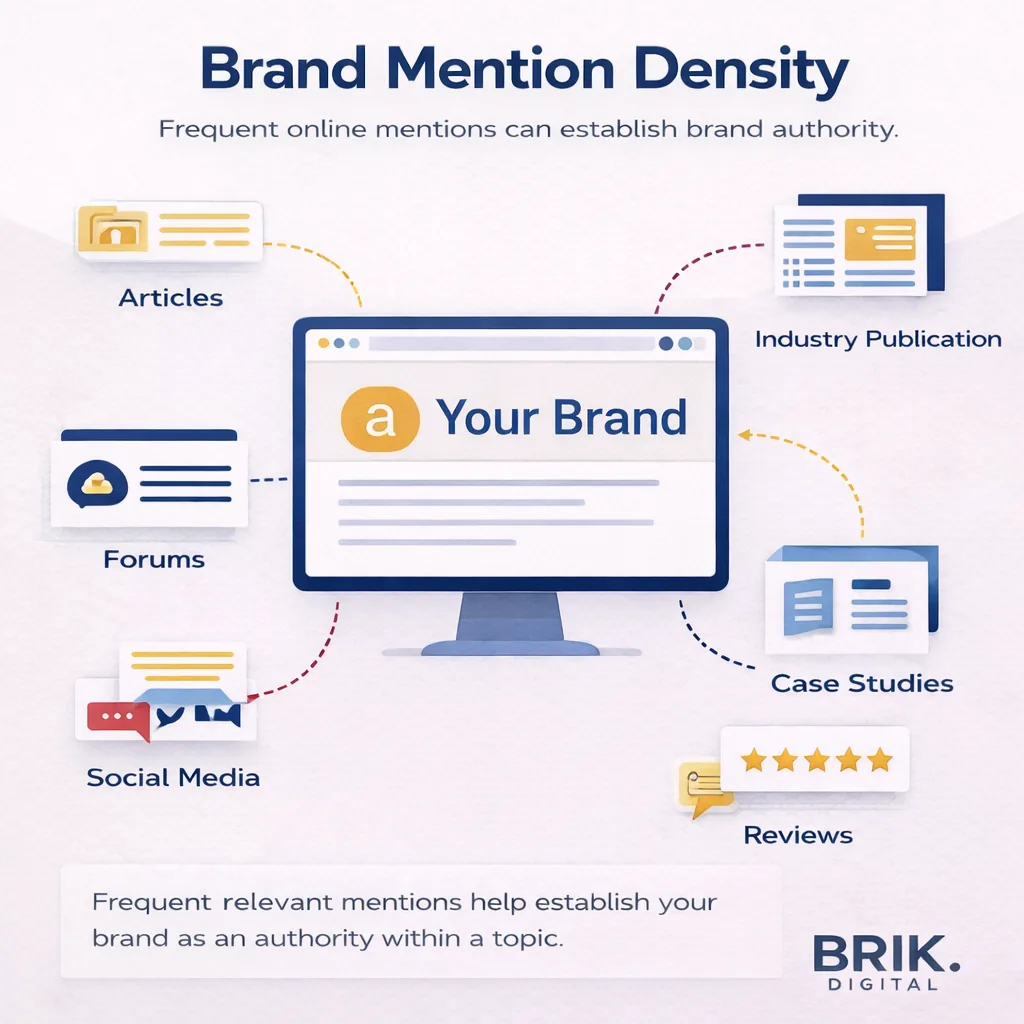
Mentions of your brand across the internet help establish recognition.
These mentions may appear in:
• Articles
• Forums
• Social media
• Industry publications
• Reviews and case studies
Frequent, relevant mentions reinforce the idea that your brand is an established authority within a topic.
Generative AI systems often rely on this broader web presence when determining which brands to reference.
Structured Data and JSON-LD
Structured data provides search engines with explicit information about a webpage.
JSON-LD is a common format used to communicate details such as:
• Organisations
• Products
• Reviews
• Authors
• Articles
This structured information helps AI systems interpret relationships between entities and topics.
Clear structured data improves the likelihood that your content will be correctly understood and referenced by AI systems.
Conversational Content Format
AI systems are built around natural language.
Content written in a conversational tone is easier for AI models to interpret and summarise.
Instead of purely technical language, conversational content uses:
• Clear explanations
• natural phrasing
• question-and-answer structures
This mirrors how people interact with AI assistants and increases the chances that your content will align with AI-generated responses.
Entity-Based Writing
Entity-based writing focuses on clearly defining concepts, people, organisations, and topics within content.
Search engines increasingly interpret information using entities rather than keywords.
For example, instead of writing vaguely about “marketing tools”, entity-based writing might reference:
• specific platforms
• recognised companies
• defined concepts
This clarity helps search engines build connections between ideas and improves your content’s ability to appear in AI-generated answers.

The Future of Search Is Hybrid
SEO, AEO, and GEO are not competing strategies.
They work together.
SEO builds the authority and discoverability of your website
AEO positions your content as the direct answer to questions
GEO ensures your brand is cited by AI systems generating responses
Businesses that combine all three approaches will have the greatest visibility in the modern search ecosystem.
How BRIK Digital Helps Businesses Adapt to AI Search
Search is no longer just about rankings.
It is about being the source of answers.
At BRIK Digital, we help businesses adapt their content, technical structure, and authority signals to perform across traditional search engines and emerging AI-powered discovery platforms.
Our approach integrates:
• SEO strategy and technical optimisation
• AI-ready content structures
• entity-based content development
• brand authority and citation signals
The result is visibility across both search results and AI-generated answers.
Because the future of search belongs to businesses that are trusted, referenced, and discoverable everywhere people ask questions.